What Does Minus Points Mean In Betting
- What Does Minus Points Mean In Betting Meaning
- What Does Mean In Betting 5
- What Does Minus Points Mean In Betting Odds
- What Is Plus Minus In Betting
- What Does Minus Points Mean In Betting College Football
- Plus And Minus In Betting
There are several very important terms and phrases you need to know if you have your sights set on becoming a sports bettor who has even the slightest idea of what you are about to bet on. Doc’s Sports “How To” section has you covered for everything you need to know, but this may be one of the most important phrases to know when betting on sports that use a point-spread. Sure, money line, juice, totals, covering the spread and bad beat are all important words and phrase to know, but “laying the points” is something the general public loves to do.
If the odds on a tennis player said +150, that means that for a $100 bet, you would win $150. Now if there is a minus sign in front of the odds, that is the number that you would have to bet in.
What Does Laying the Points Mean?
If you walk up to any professional better and ask them who they are thinking about betting in the Monday night football game, you will likely get one of two phrases. They will likely either say they are laying the points with the favorite or taking the points with the underdog. “Laying the points” as a phrase simply means to bet on the favorite team to win by the already set point spread line. For example, if you like the Dallas Cowboys to dismantle the lowly Detroit Lions and the line is set at Dallas (-6.5), this means the Lions will hypothetically start the game up 6-0, which means the Cowboys have to win by seven in order to cover the spread and turn your bet into a winner. The opposite of this would be “taking the points” which I will touch base on more thoroughly down the road. To sum it up, taking the points is a betting on the underdog, which in this case would be Detroit (+6.5). Anything other than a Dallas win by seven points or more, would make your ticket a winner.
Is Laying the Points a Good Idea?
What Does Minus Points Mean In Betting Meaning
- This would mean in order for a bet on the favored team on the spread to win they would need to win by more than 6.5 points (7 or more) in order to win the bet. It also means that a bet on the underdog team would win if the underdogs lost by less than 6.5 points (6.
- If the odds are minus (–), then that amount of money must be wagered to win $100. –150 means you must bet $150 to win $100.) If the odds are plus (+), that amount of money would be earned on.
The answer to this question really depends on who you are betting and what the point spread is. There is a saying amongst bettors which states: good teams win, but great teams cover. The general public is prone to making the same mistake time and time again. They will be betting on a favorite to win the game, despite not understanding how many points they have to lay in order to actually win their bet. If you want to bet on the great teams of the NBA and NFL – think Golden State and New England – the money line will usually be set at a price that can’t be played, thus forcing you to lay the points with either team. Remember, good teams win, great teams cover. While New England and Golden State may win the game outright- with ease, the likelihood of them covering the high, inflated point spread won’t be very high, thus making them bad options to lay the points with.
With money lines, remember that plus signs mean underdogs and minus signs mean favorites. North Carolina is an underdog at +135 and since they are the underdog, you make more than you bet if they win. A bet on North Carolina would pay $135 for every $100 you bet. When betting on favorites to simply win, you won’t be getting as much as you bet. The short answer to the question of 'what do the plus and minus signs before the odds number mean' is: a minus sign indicates a favourite to win, while a plus sign indicates an underdog. For instance - let's say that a team is -145 to win a game.
If you are a fan of the team you are going to lay the points with, I would advise you to look elsewhere first. There is nothing worse than watching your favorite team win, but costing you money because they couldn’t cover the point spread.
How to Understand Which Team is Laying Points
If you are new to betting and happen to find yourself completely confused while staring at an NFL or College Football game list for any given weekend, don’t worry you’re not alone. Reading the point spread can be tricky for starters which is why I am going to explain it as simply as I can.
When you look at the list, you will see two teams. Most times, the home team will have a spread beside their name like (-3) or (+6). Any time you see a minus sign (-3) beside their name, that home team is the favorite, which means they are laying points against their opponent. If the home team has a plus sign (+6) beside their name, they are the underdog, which means the away team is laying points and is tasked with covering the pointspread.
Just as a point of reference, typically spreads have half-points associated with them, meaning lines will be -3.5 or +6.5. This is to ensure their will be a for-sure winner against the spread. If the number is whole, like -3 or -6 and the score ends with a differential of that number, it is deemed a push. In this case, the winner did not lay the points or take the points and your money is returned in full.
What Does Mean In Betting 5
Doc's Sports is offering $60 worth of handicapper picks absolutely free - no obligation, no sales people - you don't even have to enter credit card information. You can use this $60 credit any way you please for any handicapper and any sport on Doc's Sports Advisory Board list of expert sports handicappers. Click here for more details and take advantage of this free $60 picks credit today .
Ever want to bet on an event and find yourself questioning what it means to bet the point spread? Here’s what you need to know about point spread betting.
The large majority of wagers involve bettors are picking a side in a game between two teams or individuals. Not all sides are created equal, though. A point spread is used by oddsmakers to even out a matchup from a betting perspective, assigning more or fewer points to a team’s final score. In order to win a point spread wager, a bettor must “beat the spread.” As a result of a more even matchup, point spread betting offers flatter payouts that are often even on both sides.
- Use Promo Code: SHARPSIDE
- Available In 31 States!
- Fun, Fast Prop Picks
What is a point spread?
This is one of the most common questions in sports betting, especially to new sports bettors. The point spread is how teams or sides of varying skill levels are handicapped against one another. It’s the number of points one side is giving or receiving as compared to the other.
Although each team may roster the same number of players, play by the same rules, or even run some of the same plays, the two sides are almost never equal in skill. To account for that inequality between the two teams, a point spread is used to handicap the two sides of a matchup.
If you look at the odds board and see a team’s or individual’s name followed by a minus sign and a number, that reflects that side is favored by that number of points. In the case that you see a plus sign and a number, that side is the underdog in the matchup. The minus sign means that the final score will have the spread number subtracted from it. The plus sign means that the team’s final score will have the spread number added to it.
In summary, the point spread is a calculated prediction of how much a team will win or lose by.
Why do sportsbooks use point spreads?
As we said before, not all teams are created equal. Sportsbooks use point spreads to handicap a matchup in an attempt to attract equal betting on both sides and even out the competition. Without a point spread, it would be too easy for bettors to simply take the favorite in every matchup. That’s similar as to why you see moneyline betting odds priced accordingly.
In a perfect world, sportsbooks and oddsmakers would draw perfectly balanced 50-50 betting action on both sides of a point spread. This alleviates a sportsbook’s or oddsmaker’s need for one side to win. The large majority of point spread bets come with a juice applied to the payout odds. The juice is another term for the “vig” or “rake,” and it is the money a sportsbook or sports betting operator takes on a wager.
Perfectly balanced betting on both sides would allow sportsbooks and oddsmakers to collect the juice free of liability.
How to know if a point spread bet won or lost?
In order for a point spread bet to be declared a winner, the side wagered on must “cover” the point spread. The favorite, which is the side with the minus number as the point spread, must win by more than the point spread dictates. The underdog, which is the plus number as the point spread, cannot lose by more than the point spread dictates.
Are ties allowed?
Yes, ties can happen when point spread betting. If the point spread is an even number and the difference in the competition’s result falls directly on that number such that the teams are then evenly scored, it is a tie. In point spread betting, a tie is called a “push.”
In the case of a push, all bets are returned to the bettor. If you wagered $100, you would receive your $100 back.
In many cases, point spreads will not be an even number. Rather, point spreads will display a half of a number, .5, and that is called the “hook.” When there is a hook involved, the bet cannot be a push because there are no half points in sports scoring. More information regarding the hook can be found below, in the section about key numbers.
Example of point spread betting
What Does Minus Points Mean In Betting Odds
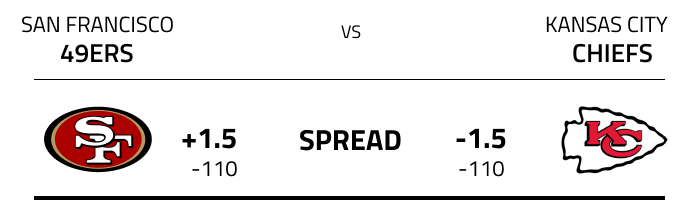
Point spreads are most commonly used and referred to in football betting. Using an example, let’s say the Buffalo Bills are facing off against the New England Patriots and that the game is in New England. When reviewing the oddsboard with the list of games, you see a number of -8 next to the Patriots team name and a number of +8 next to the Bills team name. This means that New England is favored by 8 points and that Buffalo is the underdog by 8 points.
What you’re seeing might be displayed something like the following:
- Buffalo Bills +8 (-110)
- New England Patriots -8 (-110)
Using another example of the Pittsburgh Steelers as -3 favorites over the Dallas Cowboys, let’s say the game results in a score of Pittsburgh 20 and Dallas 17. This final score would result in a push, as it fell on the exact 3-point spread that was being applied.
Do note that when it comes to point spreads, the underdog number isn’t always shown. Rather, a sportsbook will most likely only display the favorite’s spread and it’s assumed the underdog’s spread is simply the opposite.
Whatever the final score of the game turns out to be, New England will have 8 points subtracted from its total if that’s the side you bet on. If you bet on Buffalo’s side, the final score for the Bills will have 8 points added. If the final score results as 30-20 in favor of New England, bettors holding a Patriots -8 ticket would win the bet because the Patriots won by 10. Bettors who wagered on the Bills +8 would lose because the Bills lost by 10.
How much can I win on a point spread wager?
It’s most common in point spread betting to have odds of -110 on both sides. This means that if you bet $110, you’d win $100. There is where the juice comes into play. If sportsbooks were able to attract perfectly even betting action on both sides, they’d be keeping $10 of every $110 wager placed.
Sometimes, you may see a point spread bet listed with odds of -105, -115, or even -120. In those cases, you would need to bet $105, $115, or $120, respectively, to win $100. Then there are also times in point spread betting when a wager has even odds, listed as Even or +100, so whatever you bet you’ll get back.
Because oddsmakers will adjust point spreads as they see fit, another way to alter the handicap is by changing the odds slightly.
- Use Promo Code: SHARPSIDE
- Available In 31 States!
- Fun, Fast Prop Picks
Wait, point spreads can change?

Yes. Sportsbooks and oddsmakers may very well change a point spread to keep the handicap even. Injuries, starting lineups, weather, and volume of bets on one side or the other are a handful of the reasons for a point spread to change. Don’t let the thought of a changing point spread scare you, because these changes can work to your advantage. Of course, they can also work to your disadvantage.
Sticking with the previous example, here’s how the betting line for the Bills and Patriots looked to start.
- Buffalo Bills +8 (-110)
- New England Patriots -8 (-110)
That’s where the line opened, but then later in the week, much closer to game time, the line changed to the following.
- Buffalo Bills +7 (-110)
- New England Patriots -7 (-110)
What Is Plus Minus In Betting
This shift signifies that New England moved to become less of a favorite than at the opening line. If you’re a bettor who placed a wager on the Bills at +8, this is good news for you, as you’re now getting an extra point that isn’t available anymore. If you placed a wager on the Patriots -8, you now need to overcome an additional point to win.

Many sharp bettors make a practice of watching and predicting line movements. This is done in an attempt to get the best number possible.
Just as points spreads move, they aren’t uniform from venue to venue, so be sure to shop around at various sportsbooks to get the best line that you can.
Understanding key numbers
When it comes to a point spread, it’s important to understand the key numbers. This is especially true for bettors wagering on football, because football point spreads are where the key numbers tend to have the most significance.
Due to how the scoring is structured in football, with field goals being worth 3 points and touchdowns being worth 7 points when you include the 1-point extra point, the most common margins of victory are 3 and 7 points. Knowing and understanding the importance of these key numbers can allow a bettor to make better wagers.
What Does Minus Points Mean In Betting College Football

In point spread betting, you’ll often hear bettors reference the “hook.” The hook is the extra half point attached to the spread, very commonly seen in football betting. When betting on a favorite and understanding the importance of key numbers and the hook, it’s beneficial for a bettor to lay fewer than 7 points or fewer than 3 points. Similarly, it’s better to lay 7 points with a favorite than have to cover 7.5 points. The same can be said for 3.5, 3, and 2.5 – having to lay 3 points is much better than having to lay 3.5, and having to lay 2.5 is far greater than having to lay 3.
This also works for the other side of a point spread, the underdog. Any time a bettor can, he or she will want the benefit of having the hook in his or her favor. It’s much better to have an underdog if you’re getting 3 points than just 2.5, or 3.5 points instead of 3. Understanding the importance of key numbers and the hook can be the differences between winning a bet or not.
Although more attention is given to key numbers in football, they are worth paying attention to in basketball, too. Key numbers in basketball come into play less often than in football, but they’re still worth knowing what they are. In basketball, the most common margins of victory are between 5 points and 8 points, followed by 3 points and 4 points.
Puck line and run line
Point spreads are used mainly in football and basketball. In hockey, the point spread is referred to as the “puck line.” In baseball, a point spread is called the “run line.” In hockey and baseball, the puck line or run line are commonly -1.5 or +1.5 and the lines themselves don’t change but the odds might.
Plus And Minus In Betting
For more definitions of common sports betting terms, check out SharpSide’s dedicated glossary page.